
Highsfield for Portfolio Reel Concepts: Preparing a Video Concept for …
페이지 정보
작성자 Dakota 작성일26-10-28 21:50 조회2회 댓글0건관련링크
본문
A short clip can leave a strong impression when its subject and movement agree. For freelance visual creatives considering Highsfield, the Seedance 2.5 workflow is best approached through a brief with an observable goal. Take a fictional concept for portfolio reel concepts, designed to show the reasoning behind a fictional visual study. Its value depends on a readable visual decision. Rather than promising a particular generated result, this exercise explains what to ask for and how to decide whether a draft is usable.
Highsfield describes video creation as a sequence of briefing, selecting supported settings and reviewing results. Its Seedance 2.5 pages provide context for that sequence, while the generator shows current model access. Treat creative guidance and current technical options as separate information. This distinction leaves room for a useful scene study without inventing a fixed resolution, generation time, price or guaranteed result that the public page does not establish for every request.
Design the Clip for Its Destination
Consider a fictional assignment for freelance visual creatives. Its purpose is to show the reasoning behind a fictional visual study. The setting is a neutral studio with a simple geometric object, and the required visual detail is the cube edges and consistent light direction. Start by choosing a single action the viewer can follow. A portfolio is more convincing when a creator explains what was designed, generated and edited. A polished concept should not be represented as a completed client commission if no such commission took place.
A usable asset needs a clear destination, a reviewed scene and an editable message. Decide whether the project will use the clip as an illustration, a product concept or part of a larger story. The asset’s role should be clear before it reaches the audience. For this portfolio reel exercise, keep the purpose attached to the draft so the final presentation does not make an unsupported claim about a fictional scene.
A Seedance 2.5 Scene Brief to Evaluate
A proposed scene prompt could read: "Setting: a neutral studio with a simple geometric object. Action: A cube turns slightly to reveal a lit face. Camera: a locked medium view. Preserve the cube edges and consistent light direction. Keep the background stable and end with the subject still recognizable." This is an original planning example, not a tested generation record. Select only input and output options the current model actually supports.
The setting should explain the subject rather than compete with it. Here, a neutral studio with a simple geometric object provides the visual context, and the cube edges and consistent light direction supplies the point of attention. Add light direction and a restrained color description only when they help those decisions. Keep the surrounding scene limited to useful context. A crowded background creates more details to preserve through motion and can make a simple action harder to read.
Leave room for verified text in the composition instead of asking a generated scene to carry precise promotional wording. The caption should not cover the cube edges and consistent light direction or conceal the intended action. Use the real caption to check whether the layout works. If the destination needs another shape, choose a supported framing option and inspect the crop. Do not assume an attractive full-frame draft will remain understandable after it is reformatted.
Study Published Images and Video Examples
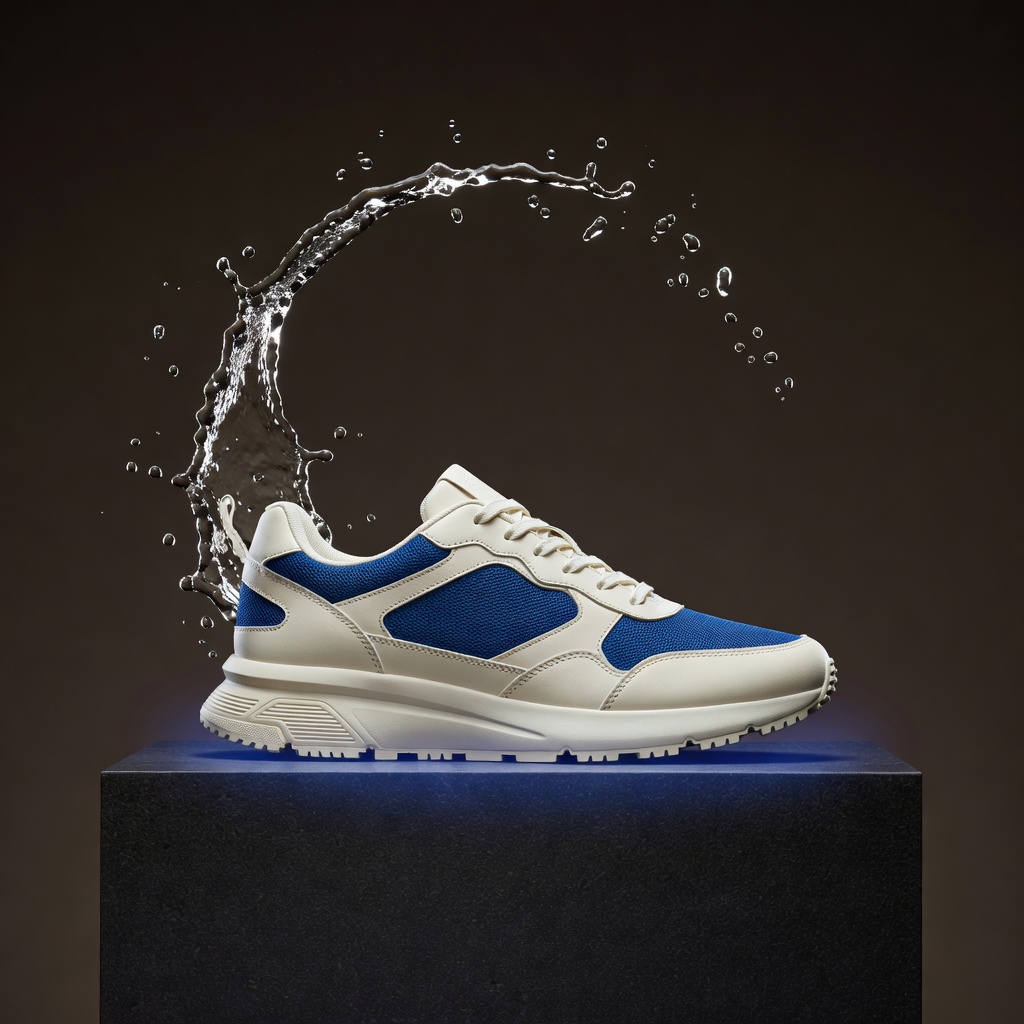 Published Highsfield visual reference: http://?utm_source=ins263 Blue and white sneaker in a studio splash composition.
The published image shows a blue and white sneaker on a dark display with an arc of water. It is useful for studying a strong silhouette and the balance between product detail and surrounding effects. A still establishes appearance, while movement needs its own brief. Use that distinction when planning the proposed scene. This is a reference from the public site, not a newly generated result or proof of Seedance 2.5 performance.
Published fantasy-city video example from Highsfield. Open the published video example.
The video poster shows a dark city with dramatic distant light. Open the clip to study the scale of an environment and the value of stable visual landmarks, then judge the moving result rather than inferring it from the poster. Its use here is as a visual reference; this article does not attribute the clip to Seedance 2.5. Compare the opening and ending before borrowing a camera idea. The proposed project remains a separate, hypothetical exercise.
Review the Action and Required Details
For this particular concept, compare the silhouette and explain the concept’s role in the portfolio. Reject the draft if the object changes proportions during rotation. That is a visible requirement rather than a general preference for a polished look. If the mismatch appears in only part of the clip, identify that moment before changing the brief. An acceptable opening frame does not excuse a subject or environment that becomes inaccurate during the intended action.
Watch the connection between the subject and its environment. Shadows, reflections, object contact and background perspective can expose an unstable scene even when the main movement looks convincing. In this example, compare the silhouette and explain the concept’s role in the portfolio. A consistent environment makes the action believable. If the intended use is a mood study, some stylization may be acceptable, but that choice should be deliberate rather than a way to overlook a defect.
A final crop should preserve the purpose of the scene, not simply fill an available rectangle. View the clip with the intended overlays and check the cube edges and consistent light direction from beginning to end. A readable composition matters more than filling every pixel. If the crop removes the action, return to the framing decision instead of hiding the problem with a longer caption. The audience should not need extra explanation to understand what the visual is trying to show.
Complete the Highsfield Workflow Carefully
Treat the displayed credit estimate as a production input. Reserve room for revisions and judge the cost of reaching an acceptable clip rather than counting only the first attempt. For Seedance 2.5, verify the current settings in Highsfield before submission. The estimate should be checked again if a setting changes. Keep the chosen parameters with the draft so another teammate can understand the conditions under which it was created.
After selecting a draft, view it with the intended caption and destination layout. The surrounding message can change what the visual appears to claim. Review the complete presentation rather than the clip in isolation. For portfolio reel concepts, review the complete captioned asset at its destination size before making the publishing decision. Keep the source and approval notes together so a later teammate can make a correction without repeating the entire creative exercise or inventing the meaning of an unfamiliar file.
A worthwhile visual study leaves the creator with something more useful than an attractive thumbnail: a clear account of what the scene communicates. Here, the purpose is to show the reasoning behind a fictional visual study. Use Highsfield’s Seedance 2.5 guidance to organize the exercise and verify current model options before requesting work. Preserve the details that make the concept accurate. Once the result serves the brief, careful editing can turn that study into a coherent part of the intended project.
댓글목록
등록된 댓글이 없습니다.