
Highsfield Library Program Videos: A Practical Method for Testing a Vi…
페이지 정보
작성자 Opal Morrice 작성일26-10-28 10:20 조회2회 댓글0건관련링크
본문
For public library communications teams, a short video has to help them make a reading event feel approachable before it earns a place in the project. Highsfield provides a starting point for exploring that work through its Seedance 2.5 guides and public examples. Consider a fictional study built around library program videos. The useful question is whether the scene communicates its intended purpose, rather than how many effects fit into the prompt. A focused brief gives the first draft a standard to meet.
The public Highsfield workflow includes writing a scene, reviewing supported model settings and inspecting a completed result before download or sharing. That sequence is more useful than assuming a name alone defines the output. For Seedance 2.5, verify the live controls when you are ready to work. The examples discussed below remain published reference material, and the proposed scene remains a hypothetical planning exercise rather than a record of a tested job.
Make Review More Specific Than Personal Taste
Consider a fictional assignment for public library communications teams. Its purpose is to make a reading event feel approachable. The setting is a warm reading corner with an empty chair and open book, and the required visual detail is the chair silhouette and book placement. Give the viewer one action to recognize before adding another. For a public event, the date, venue and accessibility details are more important than visual novelty. Keep that information in an editable caption so a change does not require regenerating the whole scene.
Separate three questions when testing a draft: does the action happen, does the required detail stay stable and does the clip serve its intended destination? For library program videos, each question has a visible answer. A structured review keeps feedback connected to the assignment. If the action works but the subject changes, the next revision should preserve motion and address fidelity instead of replacing the entire scene with another unrelated idea.
A Seedance 2.5 Scene Brief to Evaluate
A proposed scene prompt could read: "Setting: a warm reading corner with an empty chair and open book. Action: The camera moves gently toward the reading chair. Camera: a slow forward move with stable vertical lines. Preserve the chair silhouette and book placement. Keep the background stable and end with the subject still recognizable." This proposed prompt illustrates the assignment; it does not document a completed job. Select only input and output options the current model actually supports.
Think of a prompt as a shot brief someone else could stage. It should explain where the subject is, what changes and where the viewer stands. The intended event is simple: the camera moves gently toward the reading chair. The viewpoint uses a slow forward move with stable vertical lines. Put the event in place before adding aesthetic direction. This order makes it easier to spot contradictory instructions and to distinguish a motion problem from a lighting or composition problem.
Keep a working draft when it solves one part of the problem. A clip with coherent framing but unstable subject detail can still show which composition to retain. Keep the working elements visible in the revision plan. Compare that draft with the next attempt and check the originally failed detail again. This prevents an improvement in lighting from distracting the team when the same substantive error remains in the action.
Use Public References With Their Context Intact
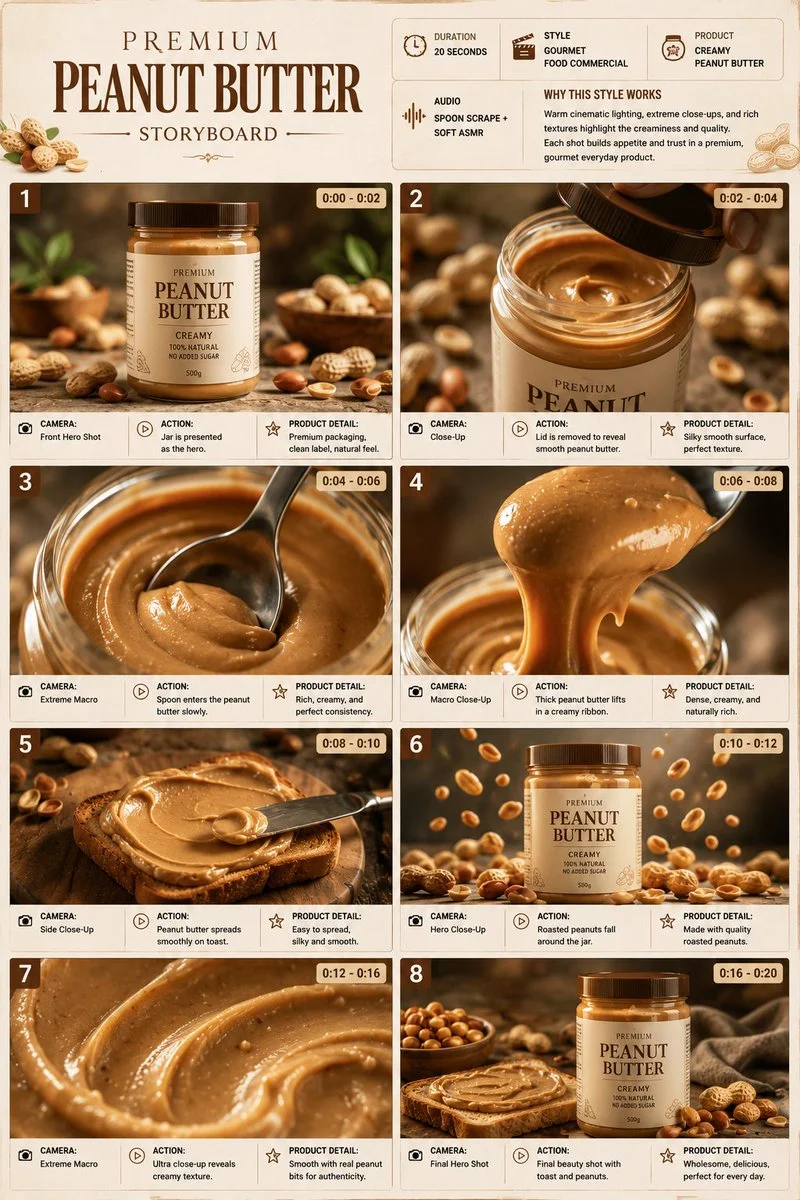 Published Highsfield visual reference: Peanut butter advertising storyboard with several compositions.
The published image shows a peanut-butter storyboard with several planned compositions. It is useful for studying the difference between a planning sequence and a finished motion result. A still establishes appearance, while movement needs its own brief. Use that distinction when planning the proposed scene. This is a reference from the public site, not a newly generated result or proof of Seedance 2.5 performance.
Published character-gesture video example from Highsfield. Open the published video example.
The video poster shows a person making a gesture in front of a doorway. Open the clip to study the readability of a gesture and the stability of the subject’s appearance, then judge the moving result rather than inferring it from the poster. Its use here is as a visual reference; this article does not attribute the clip to Seedance 2.5. Compare the opening and ending before borrowing a camera idea. The proposed project remains a separate, hypothetical exercise.
Check the Clip Against the Actual Assignment
For this particular concept, review the setting and add the actual event information afterward. Reject the draft if the book gains invented event text or shelves distort. This gives the reviewer a concrete standard beyond whether the clip looks impressive. If the mismatch appears in only part of the clip, identify that moment before changing the brief. An acceptable opening frame does not excuse a subject or environment that becomes inaccurate during the intended action.
Use the brief as a short scorecard. Mark whether the subject stays recognizable, the action happens and the camera follows the intended direction. In this scene, the failure to reject is that the book gains invented event text or shelves distort. Name the largest defect before revising the prompt. Fixing everything at once can erase a good composition without clarifying what caused the original problem or why a later result improved.
Use the normal playback speed as well as paused frames. An isolated still can reveal a shape problem, while a full playback reveals whether the movement communicates the intended action. Neither view replaces the other. For this exercise, inspect the moment when the book gains invented event text or shelves distort becomes visible. That observation should determine whether the next step is a prompt revision, a simpler scene or a decision to use another kind of production material.
Take the Highsfield Draft Into the Final Edit
Before a generation request, review the model, accepted inputs, duration, framing and credit estimate actually shown by Highsfield. Choose only available settings. A larger file is not automatically a more accurate scene. If Seedance 2.5 is not accepting requests in the current interface, retain the plan and use a suitable available workflow only after checking its own options. This article does not establish a fixed price, processing time or output specification.
The edit should serve the action the brief promised. Trim away an unnecessary lead-in, leave enough time for the chair silhouette and book placement to register and add the verified caption separately. End the clip when its intended visual point has been made. For this project, save the chosen draft with its review notes and make the final edit from that approved version. Save the selected result with the approved copy so the person publishing it does not have to guess which version or message the reviewer accepted.
A short video generator ai earns its place by making a useful idea visible. In this hypothetical library promo project, that means preserving the chair silhouette and book placement while the scene unfolds as intended. Highsfield’s Seedance 2.5 resources are a place to start planning that work, with live model options checked in the generator. A coherent result is a better goal than a complicated prompt. Keep the useful draft, document the decisions and bring exact wording into the final edit.

댓글목록
등록된 댓글이 없습니다.