
Highsfield for Forest Trail Concepts: Directing Camera Movement
페이지 정보
작성자 Libby McKeddie 작성일26-10-27 10:49 조회2회 댓글0건관련링크
본문
A visually striking draft can still miss its assignment. Outdoor storytellers and landscape artists need a clearer measure when using Highsfield to explore Seedance 2.5 video ideas. Here, a fictional brief for forest trail concepts aims to plan an immersive environmental transition. That purpose should guide every production choice. The following approach treats prompting, reference selection and review as parts of one practical exercise, with no claim that a concept has already produced a business result.
Highsfield describes video creation as a sequence of briefing, selecting supported settings and reviewing results. Its Seedance 2.5 pages provide context for that sequence, while the generator shows current model access. Treat creative guidance and current technical options as separate information. This distinction leaves room for a useful scene study without inventing a fixed resolution, generation time, price or guaranteed result that the public page does not establish for every request.
Make the Camera Explain the Scene
Consider a fictional assignment for outdoor storytellers and landscape artists. Its purpose is to plan an immersive environmental transition. The setting is a shaded forest path with a stable central opening, and the required visual detail is the central path and consistent tree trunks. Give the viewer one action to recognize before adding another. A landscape concept is useful for choosing mood and camera direction. It should not be presented as a navigational guide or a current representation of trail conditions, which require verified local information.
A camera move should answer a visual question. For this scene, it needs to reveal the central path and consistent tree trunks while the subject completes its action. Choose the viewpoint because it explains something. Begin with a slow forward move along the path, then check whether that direction actually improves understanding. If a fixed view makes the detail easier to see, motion can remain with the subject rather than becoming an additional camera requirement.

A Seedance 2.5 Scene Brief to Evaluate
A proposed scene prompt could read: "Setting: a shaded forest path with a stable central opening. Action: Leaves move gently while the path stays fixed. Camera: a slow forward move along the path. Preserve the central path and consistent tree trunks. Keep the background stable and end with the subject still recognizable." This is an original planning example, not a tested generation record. Select only input and output options the current model actually supports.
Prioritize the nouns and verbs a reviewer can verify. The scene contains a particular subject, an environment and an action; it does not need a long list of borrowed film references to become specific. Use concrete visual descriptions instead of name-dropping styles. For forest trail concepts, preserve the central path and consistent tree trunks and describe leaves move gently while the path stays fixed. Those instructions make the creative intention understandable even to a teammate who did not write the prompt.
Keep subject movement and camera travel from working against each other. If the audience needs to inspect the central path and consistent tree trunks, a rapid viewpoint change may hide it. A restrained viewpoint can give the action more clarity. State the desired direction and endpoint in the brief, then leave room for a review of whether the result maintains useful subject scale instead of unexpectedly enlarging or losing the subject.
Use Public References With Their Context Intact
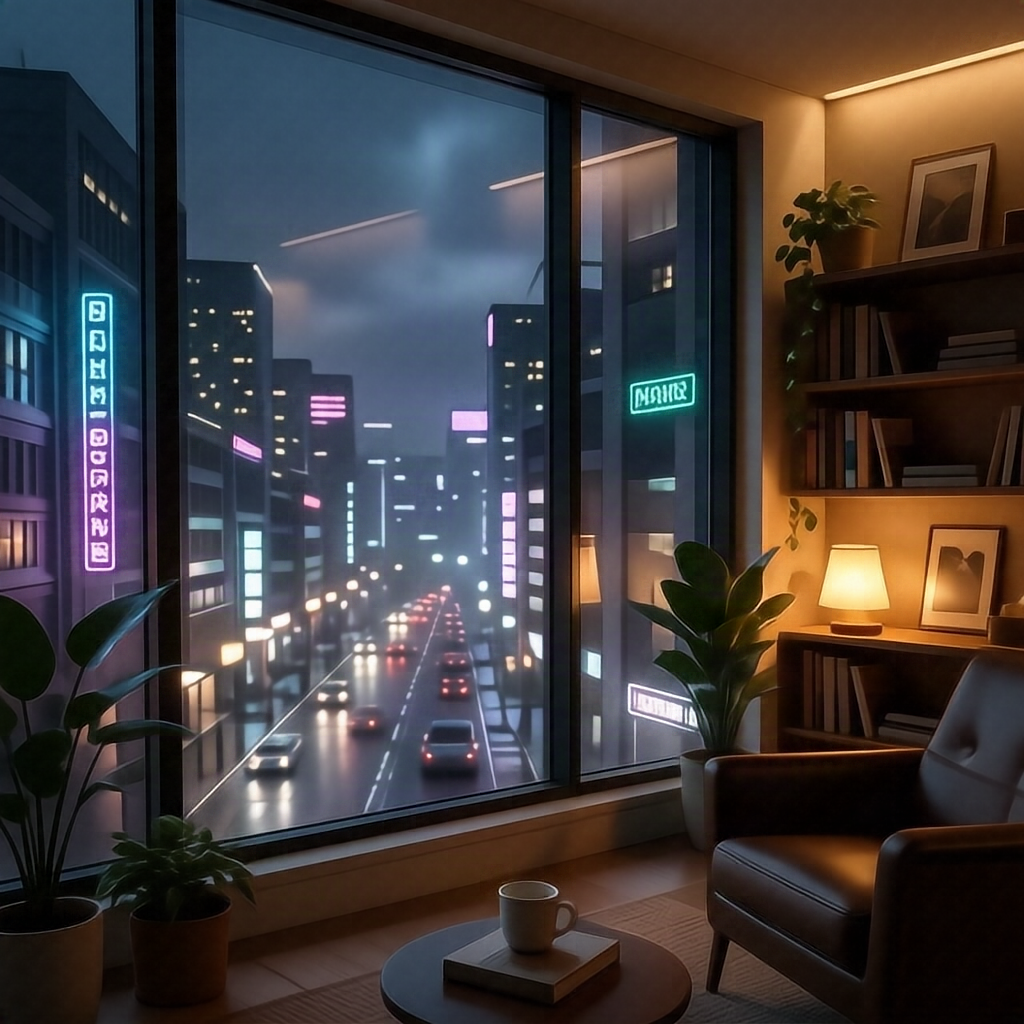 Published Highsfield visual reference: Reading room overlooking a neon city at night.
The published image shows a warmly lit reading room beside a cool city view. It is useful for studying the contrast between a stable interior and an atmospheric exterior. A still establishes appearance, while movement needs its own brief. Use that distinction when planning the proposed scene. This is a reference from the public site, not a newly generated result or proof of Seedance 2.5 performance.
Cinema Verite in 1970s Paris; published Seedance 2.0 example. Open the published video example.
The video poster shows a person beside a flower display. Open the clip to study the relationship between a subject, a setting and a restrained viewpoint, then judge the moving result rather than inferring it from the poster. This example is labeled Seedance 2.0 on the homepage, so it should not be presented as a Seedance 2.5 result. Inspect the full action before applying a similar framing decision. The proposed project remains a separate, hypothetical exercise.
Check the Clip Against the Actual Assignment
For this particular concept, check the route through the frame and the stability of landmarks. Reject the draft if the path folds or tree trunks merge. This gives the reviewer a concrete standard beyond whether the clip looks impressive. If the mismatch appears in only part of the clip, identify that moment before changing the brief. An acceptable opening frame does not excuse a subject or environment that becomes inaccurate during the intended action.
Review at the size where the final audience will see the work. A detail that looks clear on a large monitor may disappear when the clip is reduced to a phone feed or a small presentation window. Small-screen readability belongs in the acceptance decision. Check the central path and consistent tree trunks at that scale and make sure any later caption does not cover the action. A technical export size alone does not prove the scene is readable.
Place stills from the opening and ending beside one another. A successful move should reveal the intended information without changing the subject into a different object. For this scene, check the route through the frame and the stability of landmarks. Compare scale and perspective before refining the mood. This gives the team a concrete reason discover text to video AI retain or reject the move and helps avoid approving a dramatic transition that undermines the purpose of the clip.
Complete the Highsfield Workflow Carefully
Do not build a schedule around an unverified processing-time claim. Prepare the brief and permitted references first, then inspect the current Highsfield model options and estimate before requesting a job. Leave room for review as well as generation. A completed request still needs a usable composition and accurate subject details. The promise to the audience comes from the finished, reviewed asset, not from the speed of the initial attempt.
A handoff needs more than a video file. State the destination, intended message, source permissions and any detail that must stay visible. In this exercise, test the chosen view in the intended crop and preserve the important detail through the edit. A short production note can prevent an avoidable recrop. If the published asset is an illustration or concept, keep that status understandable. Do not turn a planning study into an apparent product test, customer testimonial or record of a real event.
A useful next step is to write the scene in one plain paragraph and decide what would make it unacceptable. For this project, that includes the moment when the path folds or tree trunks merge. Highsfield and its Seedance 2.5 workflow can support the exploration, but the creator still needs to supply a clear purpose and judge the result. Use the observable result as the basis for the decision, then preserve the approved version with its prompt and source context.
댓글목록
등록된 댓글이 없습니다.