
Highsfield for Sneaker Launch Videos: Reviewing and Refining a Video C…
페이지 정보
작성자 Blake 작성일26-10-24 09:29 조회2회 댓글0건관련링크
본문
For small footwear brands, a short video has to help them introduce one design detail without inventing performance claims before it earns a place in the project. Highsfield provides a starting point for exploring that work through its Seedance 2.5 guides and public examples. Consider a fictional study built around sneaker launch videos. The useful question is whether the scene communicates its intended purpose, rather than how many effects fit into the prompt. A focused brief gives the first draft a standard to meet.
Highsfield links its video workflow to prompt writing, permitted references and inspection of finished clips. Its Seedance 2.5 guidance does not make every gallery item proof of that model’s output. Keep each example’s attribution attached to the media. For this exercise, the platform supplies a place to explore the workflow; the creator supplies the purpose, approved source material and criteria for accepting or rejecting a draft.
Set a Standard a Draft Can Fail
Consider a fictional assignment for small footwear brands. Its purpose is to introduce one design detail without inventing performance claims. The setting is a dark studio plinth with a single soft overhead light, and the required visual detail is the sole pattern and visible seam placement. Give the viewer one action to recognize before adding another. The public library includes sneaker imagery, which makes a useful composition reference. It does not document the materials or performance of a real shoe, and visual similarity alone cannot substantiate a product claim.
Before generating a draft, write a short description of an acceptable result. It should preserve the sole pattern and visible seam placement and make the action understandable without extra explanation. A practical standard can be checked against the moving result. This turns review into a comparison rather than a debate about how impressive the output feels. The most attractive frame is only one part of that comparison; the whole action needs to survive playback.
Translate the Idea Into a Seedance 2.5 Prompt
A proposed scene prompt could read: "Setting: a dark studio plinth with a single soft overhead light. Action: A sneaker rotates slowly to reveal its side profile. Camera: a stationary eye-level product view. Preserve the sole pattern and visible seam placement. Keep the background stable and end with the subject still recognizable." This proposed prompt illustrates the assignment; it does not document a completed job. Select only input and output options the current model actually supports.
Describe the opening and closing states in ordinary visual language. Start with the subject established in its setting; end after the intended action is visible, with the sole pattern and visible seam placement still recognizable. The closing state should complete the action rather than introduce another one. This does not guarantee frame control in every model. It makes the intention clear enough that the resulting clip can be compared with the original brief.
Keep a working draft when it solves one part of the problem. A clip with coherent framing but unstable subject detail can still show which composition to retain. Keep the working elements visible in the revision plan. Compare that draft with the next attempt and check the originally failed detail again. This prevents an improvement in lighting from distracting the team when the same substantive error remains in the action.
Study Published Images and Video Examples
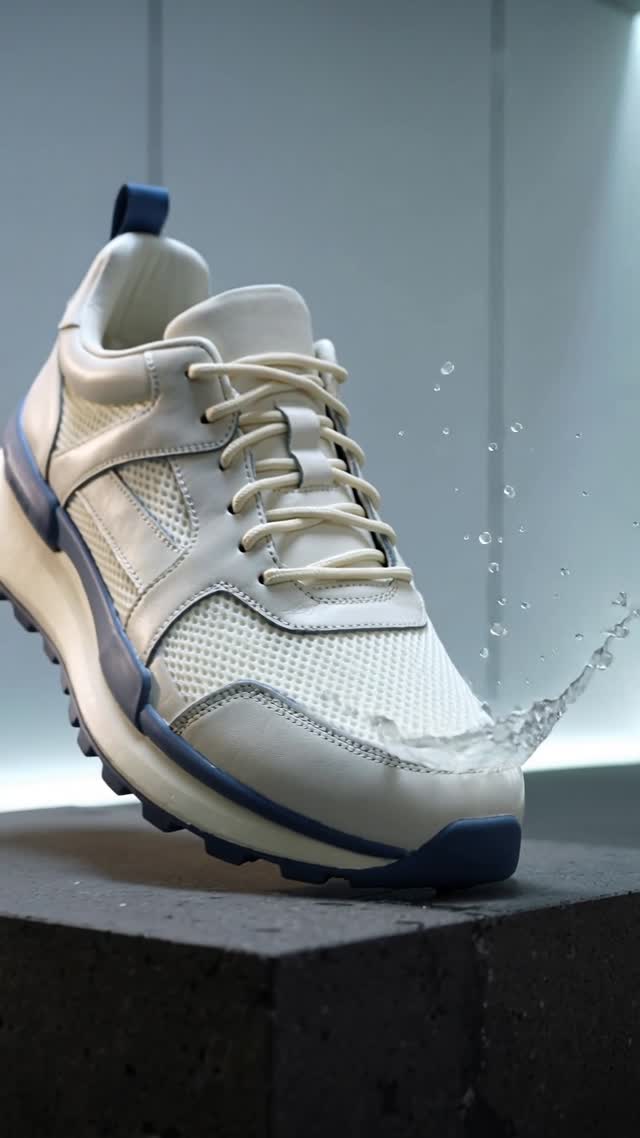 Published Highsfield visual reference: Sneaker video poster on a dark display plinth.
The published image shows a light-colored sneaker on a dark display platform. It is useful for studying clear product scale, a quiet background and directed surface lighting. The reference supplies a composition, not an automatic motion instruction. Use that distinction when planning the proposed scene. This is a reference from the public site, not a newly generated result or proof of Seedance 2.5 performance.
Published doorway-portrait video example from Highsfield. Open the published video example.
The ai video generator free poster shows a person visible through a narrow doorway opening. Open the clip to study how framing can establish a focal point before movement begins, then judge the moving result rather than inferring it from the poster. Its use here is as a visual reference; this article does not attribute the clip to Seedance 2.5. Compare the opening and ending before borrowing a camera idea. The proposed project remains a separate, hypothetical exercise.
Review the Action and Required Details
For this particular concept, check the stitching, lace count and silhouette at the beginning and end. Reject the draft if the sole morphs or a new logo appears. This gives the reviewer a concrete standard beyond whether the clip looks impressive. If the mismatch appears in only part of the clip, identify that moment before changing the brief. An acceptable opening frame does not excuse a subject or environment that becomes inaccurate during the intended action.
Ask another person to describe the clip without reading the prompt first. If their explanation differs from the intended purpose, the scene may be visually attractive but poorly communicated. An independent description can expose an unclear action. After that first impression, show the brief and inspect the mismatch together. For sneaker launch videos, pay particular attention to the sole pattern and visible seam placement and whether the camera gives that detail enough time to register.
Judge a revised result against the same criteria used for the previous one. Changing the standard to favor a new draft makes the comparison less useful. Here, check the stitching, lace count and silhouette at the beginning and end. The original requirement should survive the revision. If the clip now meets that requirement, inspect the rest of the scene for new problems before moving into editing. A correction can introduce a different error even when the originally targeted defect has disappeared.
Complete the Highsfield Workflow Carefully
Treat the displayed credit estimate as a production input. Reserve room for revisions and judge the cost of reaching an acceptable clip rather than counting only the first attempt. For Seedance 2.5, verify the current settings in Highsfield before submission. The estimate should be checked again if a setting changes. Keep the chosen parameters with the draft so another teammate can understand the conditions under which it was created.
Maintain a distinction between the generation record and the publishing record. The first explains how the draft was requested; the second identifies the version and copy accepted for use. That separation helps a teammate understand what was approved. For small footwear brands, save the chosen draft with its review notes and make the final edit from that approved version. The final asset should carry the intended action into its destination while preserving the accurate details, source context and editorial decisions that made it suitable in the first place.
The strongest outcome from this exercise is a repeatable decision process. small footwear brands should be able to explain why the shot exists, what the subject does and how a draft is reviewed. Highsfield’s Seedance 2.5 workflow gives the planning a practical setting, while the live controls establish the available options. Move forward when the scene meets its purpose, and keep the result attached to the original prompt rather than treating a lucky visual as a method.

댓글목록
등록된 댓글이 없습니다.