




Highsfield Ceramic Mug Videos: A Practical Method for Testing a Video …
페이지 정보
작성자 Mackenzie Reese 작성일26-10-24 20:45 조회1회 댓글0건관련링크
본문

Production planning becomes easier when the task is small enough to describe precisely. In this fictional ceramic mug exercise, http:// independent homeware sellers want to show how a handmade object fits into a morning routine. Highsfield offers Seedance 2.5 workflow guidance and published examples that can inform the planning stage. The right starting point is a specific scene. From there, the creator can define movement, select a suitable reference and prepare a review that another person can repeat.
The Highsfield homepage emphasizes a subject, a clear action and a review of supported settings. That is a useful planning framework for Seedance 2.5. The generator, rather than a guide’s headline, is where current model access and input options are shown. Confirm the available controls before committing to a particular method. A reference still or published clip can inspire a brief without establishing a promise about timing, output quality or a specific model’s capabilities.
Set a Standard a Draft Can Fail
Consider a fictional assignment for independent homeware sellers. Its purpose is to show how a handmade object fits into a morning routine. The setting is a small kitchen table beside a north-facing window, and the required visual detail is the handle shape and uneven glaze. Give the viewer one action to recognize before adding another. A handmade surface should retain its irregularity. Excessive smoothing can erase the characteristic a buyer actually wants to see, so the brief should distinguish deliberate texture from an unwanted rendering artifact.
Before generating a draft, write a short description of an acceptable result. It should preserve the handle shape and uneven glaze and make the action understandable without extra explanation. The acceptance description should be visible in the clip. This turns review into a comparison rather than a debate about how impressive the output feels. The most attractive frame is only one part of that comparison; the whole action needs to survive playback.
Translate the Idea Into a Seedance 2.5 Prompt
A proposed scene prompt could read: "Setting: a small kitchen table beside a north-facing window. Action: Steam rises gently from a blue ceramic mug without moving the cup. Camera: a locked medium close-up. Preserve the handle shape and uneven glaze. Keep the background stable and end with the subject still recognizable." This proposed prompt illustrates the assignment; it does not document a completed job. Select only input and output options the current model actually supports.
A reference can anchor the appearance of a scene, but it cannot resolve an unclear direction. Decide whether the task is to preserve the handle shape and uneven glaze, explore lighting or test the movement. State the priority before describing optional atmosphere. A visible priority helps the next revision stay focused. If the output loses the required detail, an appealing color palette is not enough to rescue it for the intended use.
Keep a working draft when it solves one part of the problem. A clip with coherent framing but unstable subject detail can still show which composition to retain. Reject the defect without discarding the useful evidence. Compare that draft with the next attempt and check the originally failed detail again. This prevents an improvement in lighting from distracting the team when the same substantive error remains in the action.
Study Published Images and Video Examples
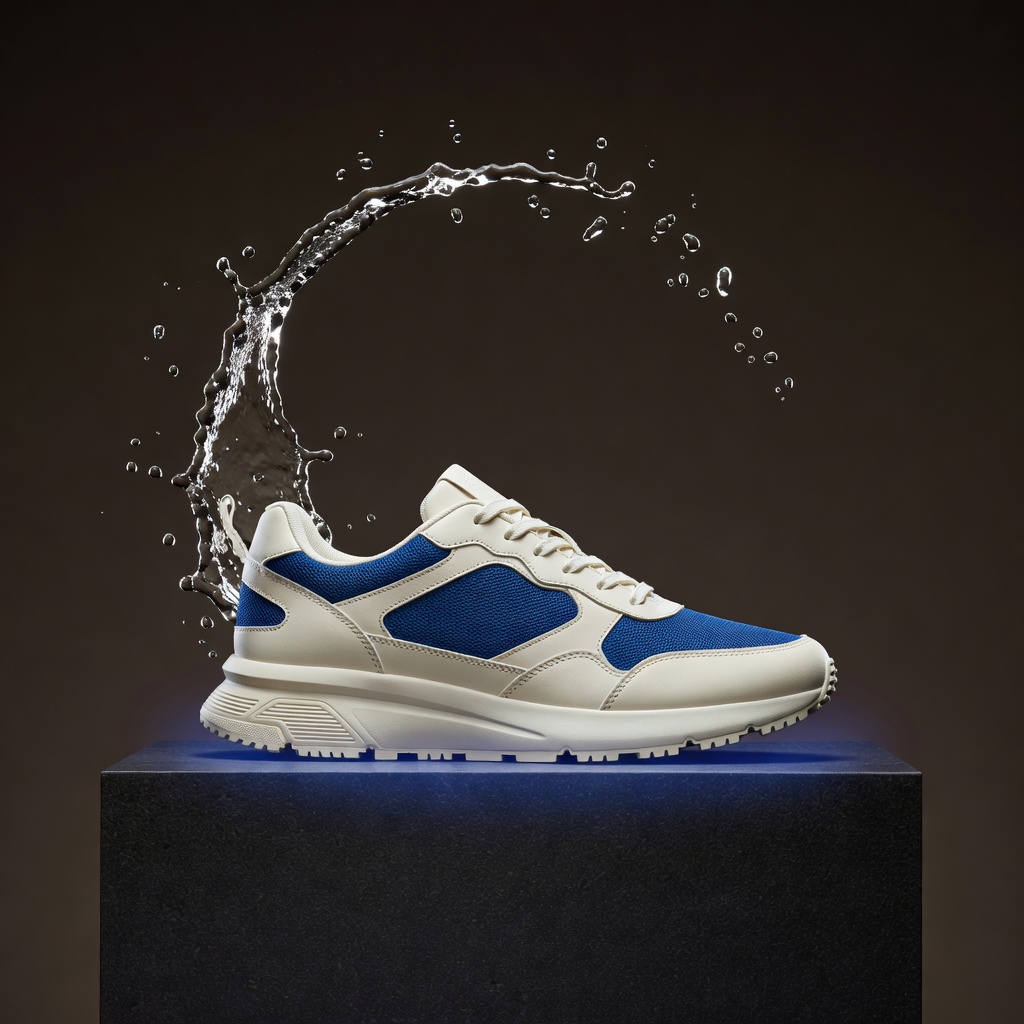 Published Highsfield visual reference: Blue and white sneaker in a studio splash composition.
The published image shows a blue and white sneaker on a dark display with an arc of water. It is useful for studying a strong silhouette and the balance between product detail and surrounding effects. A still establishes appearance, while movement needs its own brief. Use that distinction when planning the proposed scene. This is a reference from the public site, not a newly generated result or proof of Seedance 2.5 performance.
Published character-gesture video example from Highsfield. Open the published video example.
The video poster shows a person making a gesture in front of a doorway. Open the clip to study the readability of a gesture and the stability of the subject’s appearance, then judge the moving result rather than inferring it from the poster. Its use here is as a visual reference; this article does not attribute the clip to Seedance 2.5. Compare the opening and ending before borrowing a camera idea. The proposed project remains a separate, hypothetical exercise.
Review the Action and Required Details
For this particular concept, compare the rim, handle and glaze with the approved product photograph. Reject the draft if the handle changes shape or the mug slides across the table. This gives the reviewer a concrete standard beyond whether the clip looks impressive. If the mismatch appears in only part of the clip, identify that moment before changing the brief. An acceptable opening frame does not excuse a subject or environment that becomes inaccurate during the intended action.
Review the clip at normal speed before examining individual frames. The first pass asks whether the action is understandable; the second looks for instability in the handle shape and uneven glaze. Frame inspection often catches details a smooth playback hides. Compare the opening, a middle moment and the ending, then examine any transition that looks wrong. Do not let an attractive thumbnail stand in for a review of the actual moving result.
Use the normal playback speed as well as paused frames. An isolated still can reveal a shape problem, while a full playback reveals whether the movement communicates the intended action. The moving sequence and individual frames answer different questions. For this exercise, inspect the moment when the handle changes shape or the mug slides across the table becomes visible. That observation should determine whether the next step is a prompt revision, a simpler scene or a decision to use another kind of production material.
Complete the Highsfield Workflow Carefully
Before a generation request, review the model, accepted inputs, duration, framing and credit estimate actually shown by Highsfield. Choose only available settings. More pixels do not fix an unclear brief. If Seedance 2.5 is not accepting requests in the current interface, retain the plan and use a suitable available workflow only after checking its own options. This article does not establish a fixed price, processing time or output specification.
Download the selected result through the completed-job workflow available in Highsfield, then check the file in the editor you intend to use. Preserve its original prompt and the reference context. The saved file still needs a final production check. In this fictional assignment, save the chosen draft with its review notes and make the final edit from that approved version. Verify that captions, crop and playback support the original purpose before the clip is placed beside promotional wording or shared as part of a larger story.
The point of this ceramic mug exercise is to show how a handmade object fits into a morning routine with a scene that another person can understand and review. Highsfield’s Seedance 2.5 guidance provides a starting framework, while the actual generator defines current technical options. A focused brief should make both success and failure observable. If the draft preserves the handle shape and uneven glaze and completes the intended action, it can move into editing with a clear reason for being there.
댓글목록
등록된 댓글이 없습니다.