




Highsfield Online Course Introductions: Choosing a Camera View That Se…
페이지 정보
작성자 Nickolas 작성일26-10-26 23:22 조회3회 댓글0건관련링크
본문
There is a difference between imagining a scene and explaining how that scene should unfold. Highsfield gives independent course designers a place to study that difference through Seedance 2.5 workflow guidance and public examples. A hypothetical online course project makes the question concrete: the brief should give one learning objective a visible example. A visible change should connect its opening and closing states. Those choices help keep an experiment grounded when an attractive first result invites premature approval.
A Highsfield guide can help organize a creative brief, while the generator supplies current options for a particular model. Those roles are different. When planning a Seedance 2.5 concept, verify accepted inputs and settings before submitting any generation request. The gallery is useful for studying composition, but their presence on a workflow page does not prove they share the same model, settings or source material as the clip you want to create.
Choose a Viewpoint With a Specific Job
Consider a fictional assignment for independent course designers. Its purpose is to give one learning objective a visible example. The setting is a simple studio desk with a blank notebook, and the required visual detail is the notebook edges and the pen direction. Start by choosing a single action the viewer can follow. A course introduction should say what the learner will do, not imply a qualification the course cannot provide. Use the generated clip as a visual opening and let verified course information carry the substantive promise.
Plan where the viewer stands before choosing how the camera moves. The scene uses an overhead locked view because the assignment is to give one learning objective a visible example. A more dramatic viewpoint is useful only if it strengthens that assignment. Judge the angle by what it helps the audience understand. Keeping the camera’s role explicit also makes it easier to decide whether a later crop preserves the intended meaning.
Translate the Idea Into a Seedance 2.5 Prompt
A proposed scene prompt could read: "Setting: a simple studio desk with a blank notebook. Action: A pen rolls gently beside the notebook and stops. Camera: an overhead locked view. Preserve the notebook edges and the pen direction. Keep the background stable and end with the subject still recognizable." This proposed prompt illustrates the assignment; it does not document a completed job. Select only input and output options the current model actually supports.
Prioritize the nouns and verbs a reviewer can verify. The scene contains a particular subject, an environment and an action; it does not need a long list of borrowed film references to become specific. Explain the appearance directly rather than relying on a familiar franchise. For online course introductions, preserve the notebook edges and the pen direction and describe a pen rolls gently beside the notebook and stops. Those instructions make the creative intention understandable even to a teammate who did not write the prompt.
Choose an ending frame that still communicates the same assignment. The view should not finish so close that the notebook edges and the pen direction becomes abstract, or so wide that the subject disappears into the environment. End the move where the important detail remains understandable. Describe the intended subject scale in the brief and use the completed clip to judge whether the movement delivers that scale consistently enough for the planned edit.
Study Published Images and Video Examples
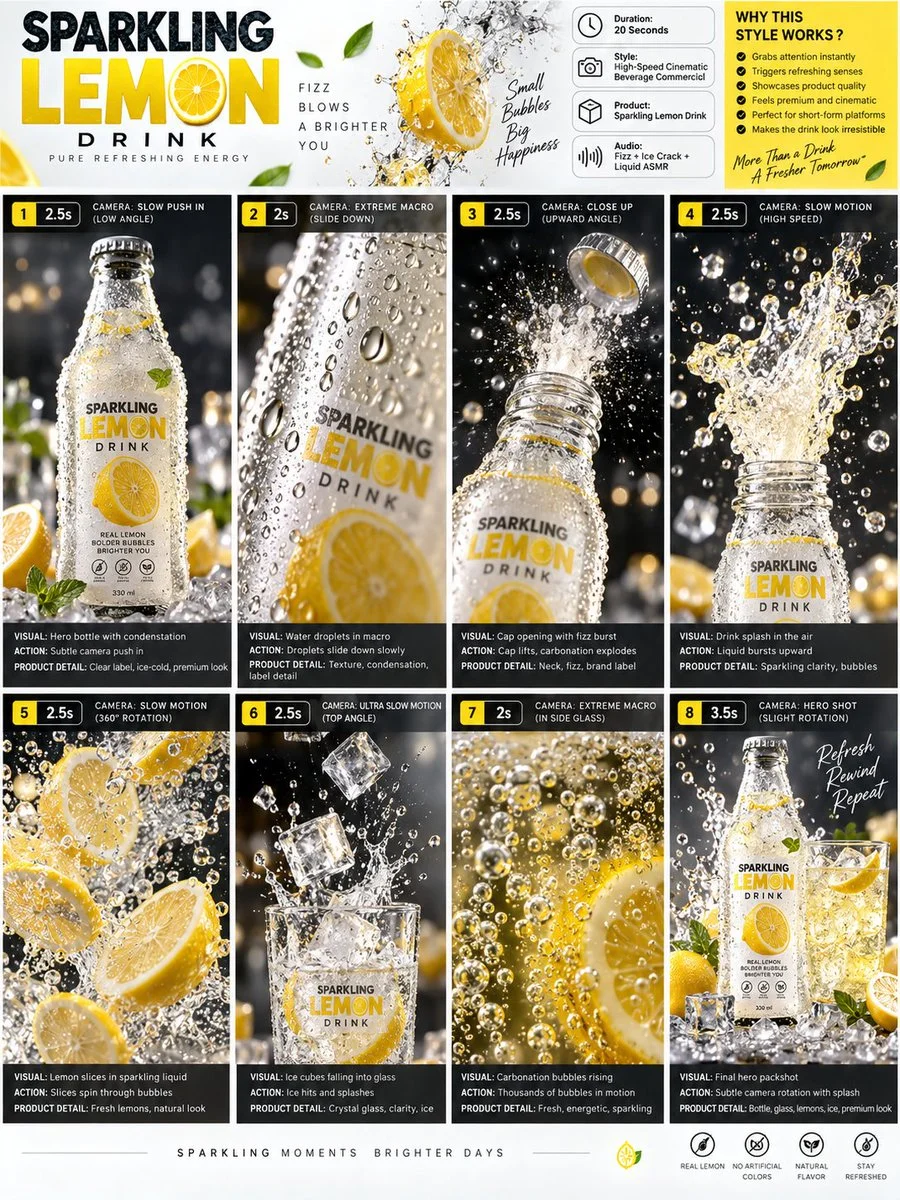 Published Highsfield visual reference: Sparkling lemon drink storyboard with separate shot panels.
The published image shows a lemon-drink storyboard arranged in distinct panels. It is useful for studying using a sequence of small visual decisions to organize a larger idea. The reference supplies a composition, not an automatic motion instruction. Use that distinction when planning the proposed scene. This is a reference from the public site, not a newly generated result or proof of Seedance 2.5 performance.
Published sneaker video from the Highsfield prompt library. Open the published video example.
The video poster shows a light-colored sneaker on a dark plinth. Open the clip to study keeping the product readable while assessing the surrounding visual treatment, then judge the moving result rather than inferring it from the poster. Its use here is as a visual reference; this article does not attribute the clip to Seedance 2.5. Inspect the full action before applying a similar framing decision. The proposed project remains a separate, http://?utm_source=ins263 hypothetical exercise.
Check the Clip Against the Actual Assignment
For this particular concept, inspect object contact and keep lesson titles in a separate overlay. Reject the draft if the page gains illegible writing or the pen passes through it. That is a visible requirement rather than a general preference for a polished look. If the mismatch appears in only part of the clip, identify that moment before changing the brief. An acceptable opening frame does not excuse a subject or environment that becomes inaccurate during the intended action.
Put the permitted reference beside the output when appearance matters. Memory is a weak guide to subtle changes in shape, spacing or color. For this exercise, inspect object contact and keep lesson titles in a separate overlay. The reference gives the reviewer a stable standard. If the project needs factual product or location accuracy, separate that decision from a general judgment that the clip looks attractive. Visual appeal and accurate representation answer different questions.
Place stills from the opening and ending beside one another. A successful move should reveal the intended information without changing the subject into a different object. For this scene, inspect object contact and keep lesson titles in a separate overlay. Check the spatial relationship before polishing the atmosphere. This gives the team a concrete reason to retain or reject the move and helps avoid approving a dramatic transition that undermines the purpose of the clip.
Take the Highsfield Draft Into the Final Edit
Do not build a schedule around an unverified processing-time claim. Prepare the brief and permitted references first, then inspect the current Highsfield model options and estimate before requesting a job. Allow time to inspect the result before considering the task finished. A completed request still needs a usable composition and accurate subject details. The promise to the audience comes from the finished, reviewed asset, not from the speed of the initial attempt.
After selecting a draft, view it with the intended caption and destination layout. The surrounding message can change what the visual appears to claim. Judge the asset in the context where its audience will encounter it. For online course introductions, test the chosen view in the intended crop and preserve the important detail through the edit. Keep the source and approval notes together so a later teammate can make a correction without repeating the entire creative exercise or inventing the meaning of an unfamiliar file.
A worthwhile visual study leaves the creator with something more useful than an attractive thumbnail: a clear account of what the scene communicates. Here, the purpose is to give one learning objective a visible example. Use Highsfield’s Seedance 2.5 guidance to organize the exercise and verify current model options before requesting work. Preserve the details that make the concept accurate. Once the result serves the brief, careful editing can turn that study into a coherent part of the intended project.
댓글목록
등록된 댓글이 없습니다.